 GEM Digital
Launching a regional microsite in HubSpot in 7 days

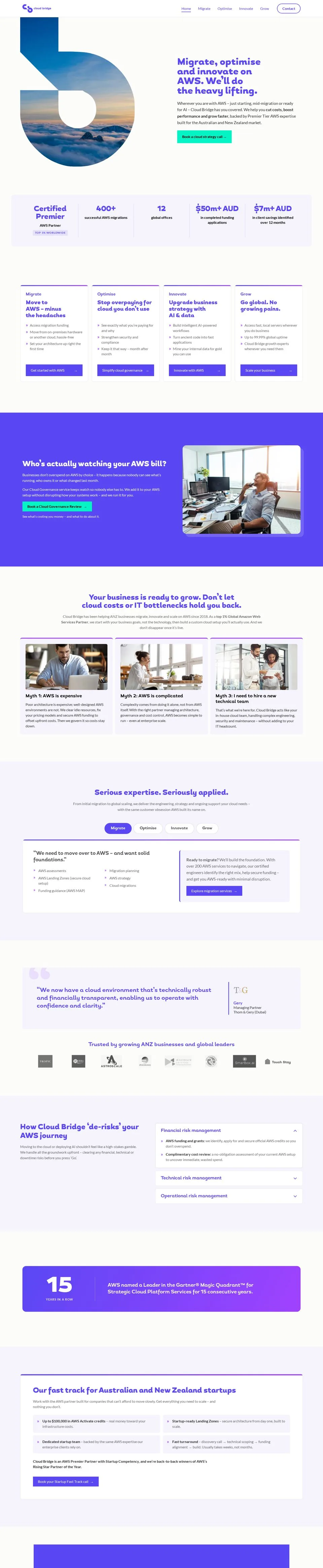
Cloudbridge is an AWS Premier Partner headquartered in the UK. When they expanded into Australia and New Zealand, they needed a site that spoke to that market: local proof points, figures in Australian dollars, ANZ client logos and a clear route to book a call.
They needed it quickly. GEM Digital designed and launched the Australian microsite on HubSpot in seven days.
This post covers how we approached it, and the decisions that made a one-week turnaround possible without cutting corners.
What "microsite" meant here
The Australian site isn't a cut-down landing page. It's a full set of pages for the ANZ market:
- An Australian homepage
- Four service pillar pages: Migrate, Optimise, Innovate and Grow
- An Australian contact page
Each pillar page goes into the specific services Cloudbridge offers under that heading, from AWS migration funding and Landing Zones through to FinOps, generative AI and multi-region infrastructure.
Decision 1: Same domain, not a new one
The first call was where the site should live. The options were a separate domain (such as a .com.au), a subdomain, or a set of pages on the existing domain.
We kept it on the existing domain, under its own Australian URLs (/au-home, /au-migrate, /au-optimise and so on). That meant:
- No new HubSpot domain to connect and configure, which saved time in a week where every day counted
- The site inherits the main domain's search authority rather than starting from zero
- One CRM, one set of forms, one analytics view. Australian leads land in the same HubSpot portal as UK leads, so sales and reporting don't need a second system
Tip: If a regional site will later need its own domain, plan the URL structure so the pages can be moved with clean redirects. A consistent prefix like
/au-makes that easy.
Decision 2: Reuse the module library instead of starting from scratch
This was the biggest reason a week was realistic.
GEM Digital had already built Cloudbridge a library of custom HubSpot modules for their landing pages and emails, including governance gap cards, a vendor ecosystem grid and USP modules. The Australian pages were assembled from that library, with new sections built only where the ANZ market needed something different.
Reusing modules meant:
- The microsite matched the main brand from day one, without restyling anything
- Most of the week went on content and layout, not development
- Cloudbridge's team can edit the Australian pages themselves, using modules they already know
Decision 3: Localise the proof, not just the spelling
A regional site that only swaps the currency symbol doesn't convince anyone. The Australian homepage leads with proof that matters to an ANZ buyer:
- Figures in Australian dollars, such as funding applications completed and client savings
- A client logo section headed "Trusted by growing ANZ businesses and global leaders"
- Messaging written for the Australian and New Zealand market, including a Startup Fast Track offer built around AWS Activate credits
The structure stays consistent with the main site, so the brand feels the same. What changes is the evidence.
Decision 4: One clear action on every page
Every page on the microsite points to a call. The header CTA is "Book a cloud strategy call", and the pages close with a short "Book a 15-minute cloud strategy call" prompt.
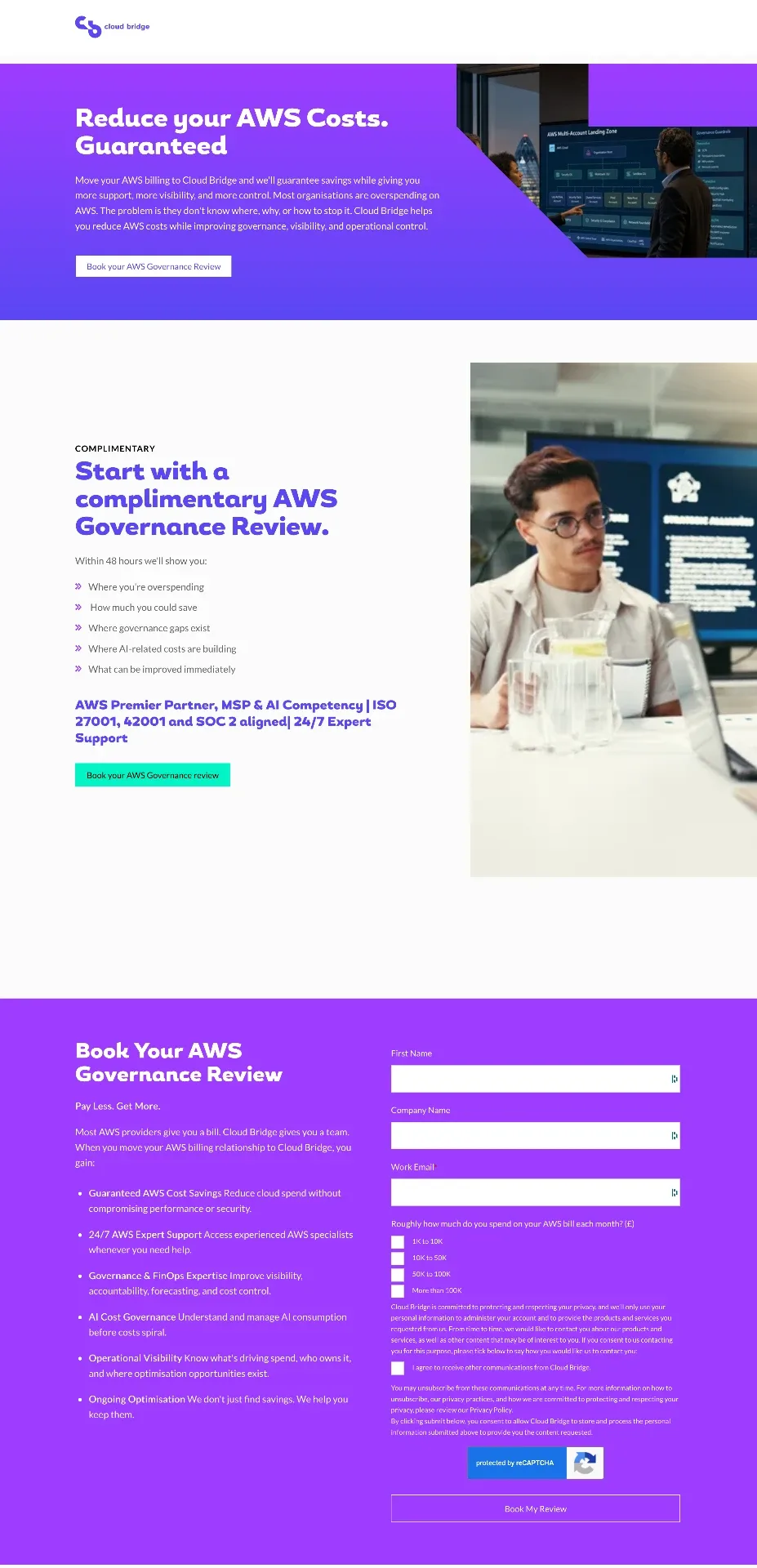
The governance section on the homepage links to Cloudbridge's governance review, which ties the microsite into the AWS Governance Assessment quiz we built for them. A visitor who isn't ready for a call can take the assessment instead, and still end up in the CRM with a score attached.
How the seven days broke down
A one-week launch only works with a tight plan. Ours looked like this:
- Days 1 to 2: Structure and wireframes. Agree the page list, the URL structure and what goes in each section, working from Cloudbridge's wireframes.
- Days 3 to 5: Build. Assemble the pages from the module library, add new sections where needed, and drop in the Australian content.
- Day 6: Review. Client feedback round, plus our own checks across desktop, tablet and mobile.
- Day 7: QA and launch. Test every form and CTA, check meta titles and descriptions, set up navigation between the Australian pages, and publish.
The non-negotiable was content. A fast build only stays fast if the copy, logos and figures arrive on time, so agreeing a content deadline up front mattered as much as the build plan.
What we'd tell anyone launching a regional site
- Keep it on your main domain unless there's a strong reason not to. You keep your search authority and your single CRM.
- Use a clear URL prefix so the regional pages are easy to manage, report on and move later.
- Build from existing modules wherever possible. It's faster, and the brand stays consistent.
- Localise the proof points, not just the spelling and currency.
- Lock the content deadline before the build starts.
- Test every form end to end before launch, so regional leads actually reach the right people.
You can see more of the Cloudbridge work, including the governance assessment and module library, in the case study.
An interactive governance assessment that turns visitors into qualified leads.
Related posts
Got a HubSpot problem like this?